
Push Back Racking vs Selective Pallet Racking: Which System Actually Saves More Warehouse Space in Malaysia?
Warehouse space in Malaysia is becoming more expensive and harder to expand. For many businesses, the main challenge is not just storing inventory, but using available space efficiently without increasing rental or operational costs.
Two of the most widely used heavy-duty storage systems are push back racking and selective pallet racking. Both are common in industrial warehouses, but they serve very different purposes when it comes to space usage, accessibility, and daily operations.
What Is Push Back Racking?
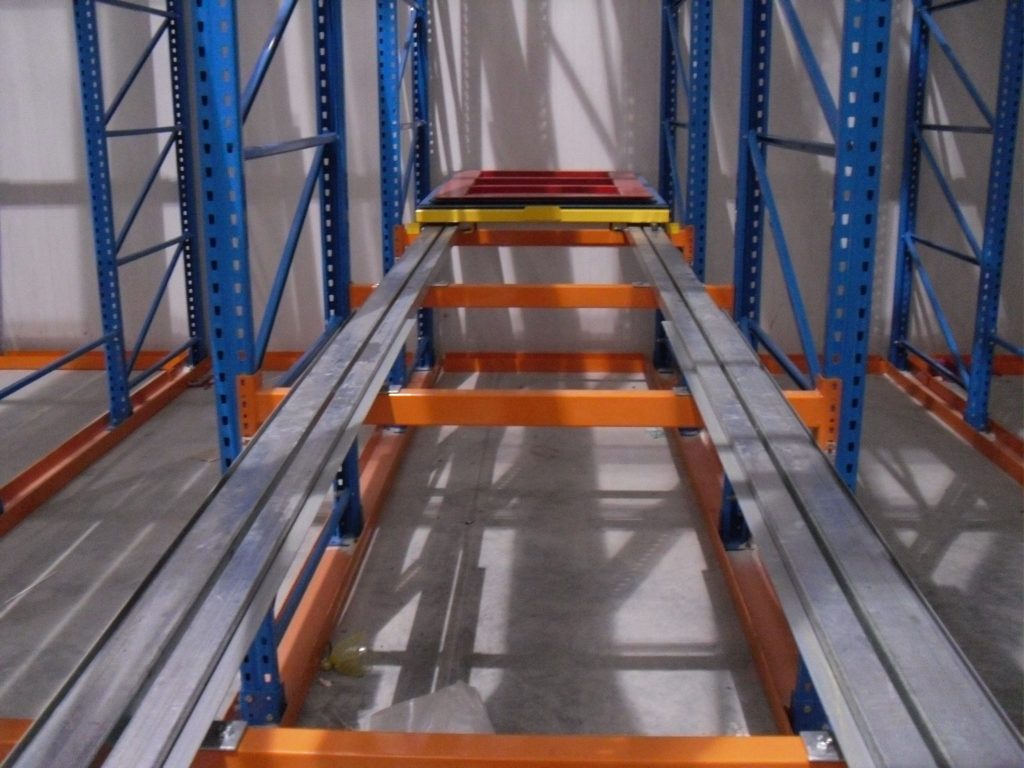
Push back racking is a high-density storage system designed to maximize warehouse space by reducing aisle requirements and increasing storage depth.
It uses inclined rails and nested carts. When a pallet is loaded, it pushes the previous pallet backward into the lane.
Key features:
- Stores 2 to 6 pallets deep per lane
- Uses Last-In, First-Out (LIFO) system
- Reduces aisle space requirement
- Increases storage density significantly
This system is commonly used when warehouse space efficiency is more important than individual pallet access.

What Is Selective Pallet Racking?
Selective pallet racking is the most commonly used warehouse system because it provides direct access to every pallet position.
It consists of upright frames and beams that form individual storage slots, allowing forklifts to access any pallet without moving others.
Key features:
- Direct access to every pallet
- Simple structure and easy installation
- Highly flexible for different products
- Suitable for fast-moving and mixed inventory
The main drawback is that it requires an aisle for every rack row, which reduces storage density.
Space Efficiency Comparison Table
| Factor | Selective Pallet Racking | Push Back Racking |
|---|---|---|
| Space Utilization | Moderate | High |
| Storage Density | Lower | Higher |
| Aisle Requirement | One aisle per rack row | Fewer aisles required |
| Pallet Access | Direct access to all pallets | Limited access (LIFO system) |
| SKU Flexibility | High (many product types) | Medium (similar products preferred) |
| Forklift Movement | High travel distance | Reduced travel distance |
| Best Use Case | Fast picking, mixed inventory | Bulk storage, high volume goods |
Space Efficiency Breakdown
Selective Pallet Racking
Selective racking prioritizes accessibility over density. Because every pallet needs a dedicated aisle, a significant portion of warehouse floor space is used for forklift movement rather than storage.
This results in:
- Lower storage density
- Higher flexibility
- Faster picking operations
Push Back Racking
Push back racking prioritizes space optimization. By storing multiple pallets deep in each lane and reducing aisle requirements, it allows significantly more inventory to be stored in the same warehouse footprint.
This results in:
- Higher storage density
- Better cube utilization
- Reduced wasted aisle space
Operational Differences
Push Back Racking Operations
- Forklift loads and unloads from one lane entry point
- Less internal movement within racks
- Better suited for bulk storage and batch handling
Selective Racking Operations
- Forklifts access every pallet directly
- Higher movement across multiple aisles
- Best for frequent picking operations
Which System Saves More Warehouse Space?
Selective pallet racking is still the better choice when:
- You need fast access to every pallet
- You handle a wide variety of SKUs
- Inventory turnover is frequent
- Flexibility is more important than density
When Push Back Racking Is Better
Push back racking in Malayia is more suitable when:
- Warehouse space is limited
- You store bulk or similar products
- High-density storage is required
- You want to reduce aisle space usage
Real Warehouse Insight in Malaysia
In Malaysia, many warehouses begin with selective pallet racking due to its lower initial cost and flexibility. However, as storage demand increases, space becomes a limiting factor.
At that stage, businesses often transition to or integrate push back racking systems to:
- Increase storage capacity without expanding warehouse size
- Reduce aisle wastage
- Improve warehouse density and efficiency
Some warehouses also combine both systems, using selective racking for picking zones and push back racking for bulk storage areas.
Need Help Choosing the Right Warehouse Racking System?
Not sure which racking system is right for your warehouse? The wrong choice can lead to wasted space, slower operations, and higher long-term costs.
Get expert advice on push back racking and selective pallet racking solutions in Malaysia tailored to your storage needs, inventory type, and warehouse layout.
Contact us today to plan a more efficient and high-capacity warehouse system.
Conclusion
Push back racking in Malaysia is the better option when the main goal is maximizing warehouse space. Its high-density design reduces aisle usage and allows more pallets to be stored within the same footprint.
Selective pallet racking is better when accessibility and flexibility are more important. The right choice depends on whether your warehouse prioritizes storage capacity or fast and direct access to every pallet.
Frequently Asked Questions (FAQs)
Which system saves more warehouse space, push back racking or selective pallet racking?
Push back racking saves more space because it allows multiple pallets to be stored deeper per lane and reduces aisle requirements.
Is selective pallet racking still widely used in Malaysia?
Yes, it is the most common system due to its flexibility and direct access to every pallet.
Can push back racking be used for all types of products?
Not always. It is best suited for bulk storage and products with medium SKU variety.
What is the main limitation of push back racking?
It uses a Last-In, First-Out system, so it is not ideal when you need direct access to every pallet.
Can both systems be used in the same warehouse?
Yes, many warehouses use selective racking for picking areas and push back racking for bulk storage zones.